At a Glance
Component-level explanations (like attention maps or tool logs) are not enough for agentic systems; you need system-level causal tracing and cross-modal translation to find root causes and hold these systems accountable.
ON THIS PAGE
What They Found
Agentic systems are groups of specialized agents that plan and act together over many steps, and their failures often emerge from interactions across components and time. Explanations that focus on single modules can’t be directly compared or chained, so they miss error propagation across the whole workflow. Concurrent runs make the problem worse: thousands of per-module explanations can obscure which request or interaction caused a failure. The path forward requires new interpretability tools that trace causal chains across time, translate between explanation types, and support interactive human–system dialogue while guarding against unfaithful self-explanations. causal chains across time
By the Numbers
1The field is framed in three eras: Early AI, Agentic Transition, and the Agentic Systems era — highlighting a shift from single-step models to multi-step team behavior.
2Concrete example shows an error can ripple from perception at time t to final execution by time t+7, meaning root causes may be delayed by multiple steps.
3In production, concurrent executions can generate thousands of component-level explanations, making attribution and debugging intractable without system-level aggregation.
What This Means
Engineers building autonomous multi-agent workflows need these insights to design actionable logs, causal traces, and cross-component debugging tools. Technical leaders and safety teams should use this to set requirements for accountability (e.g., traceability, reproducibility) before deployment. Researchers can prioritize system-level benchmarks and evaluation patterns rather than only improving per-module explainability. accountability
Not sure where to start?Get personalized recommendations
Key Figures
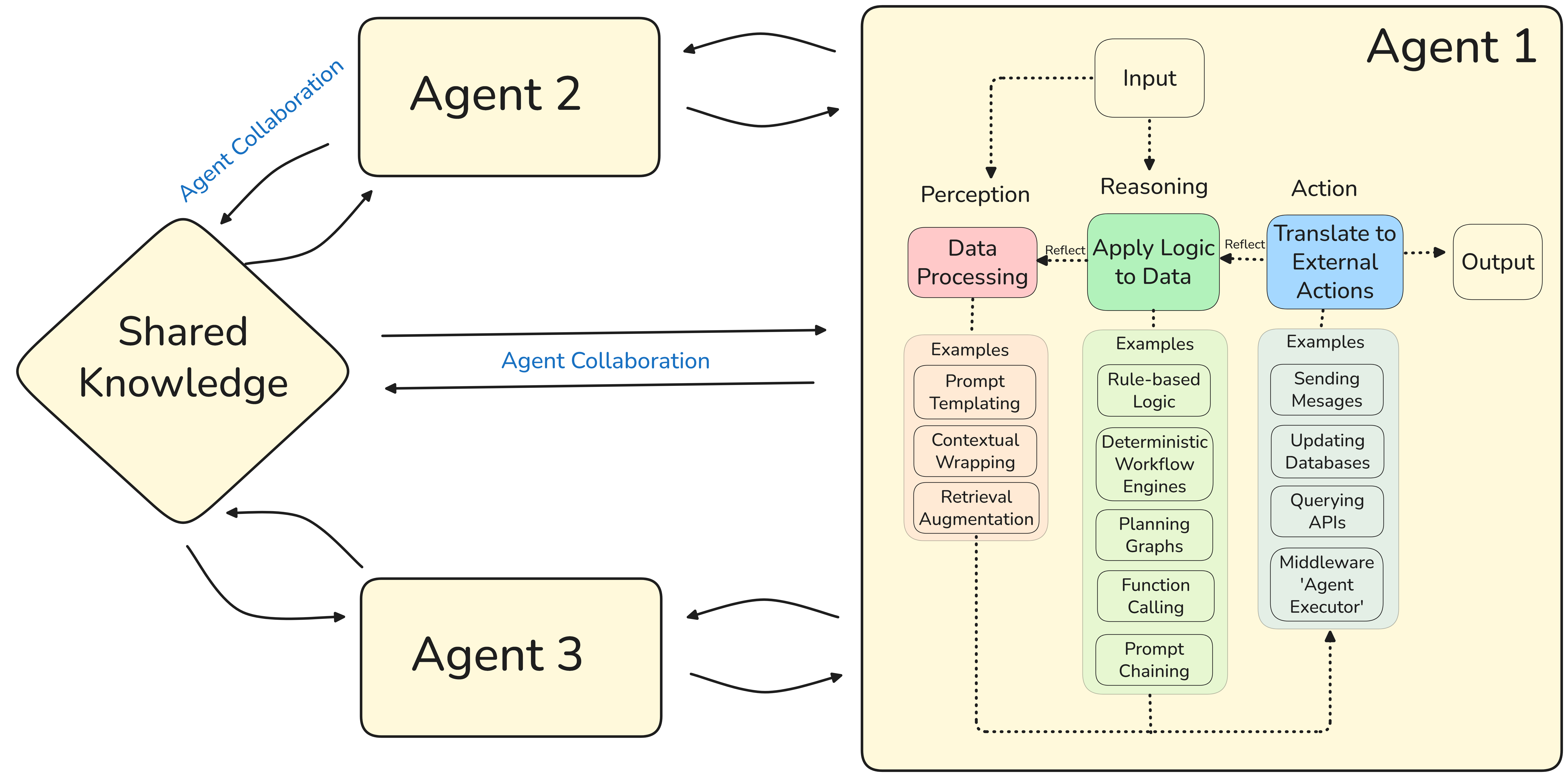
Fig 1: Figure 1: An Agentic System Core Anatomy and Task Examples
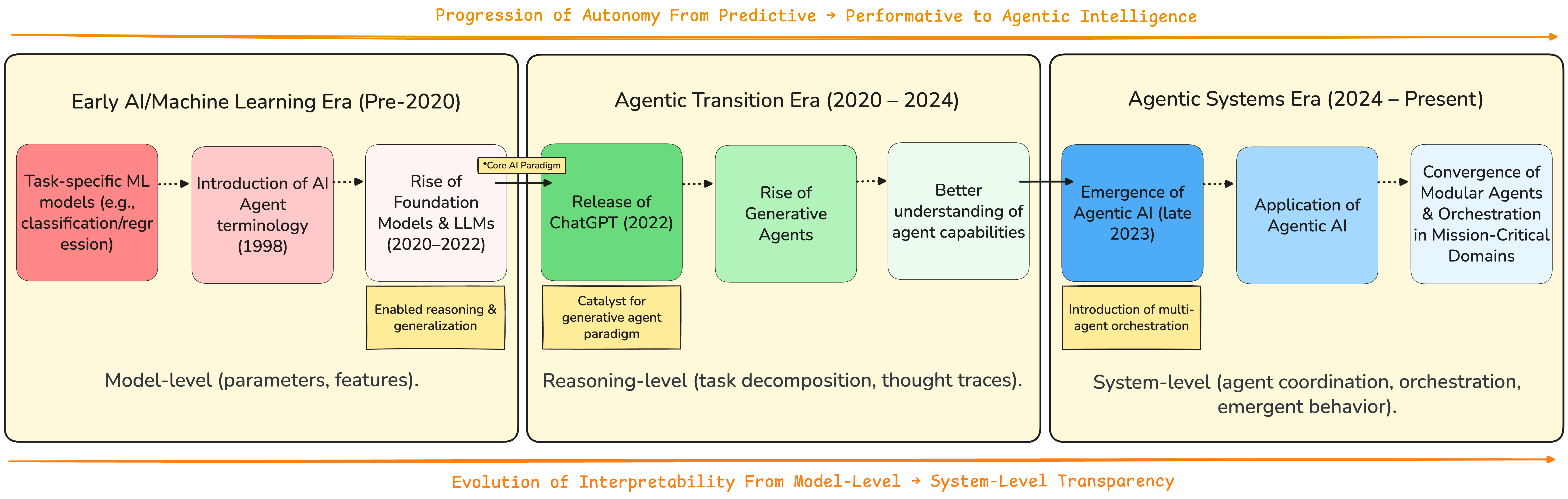
Fig 2: Figure 2: Evolution of AI Agents to Agentic Systems across three eras, illustrating the parallel progression of autonomy and interpretability.
Ready to evaluate your AI agents?
Learn how ReputAgent helps teams build trustworthy AI through systematic evaluation.
Learn MoreConsiderations
The discussion is largely conceptual and survey-based rather than reporting new empirical benchmarks or tool implementations. Interactive, dialogue-driven explanations depend on user behavior, which complicates reproducibility and systematic evaluation. Relying on agent-generated self-explanations is risky because fluent rationales can be unfaithful or hallucinated and must be validated against causal traces and logs. causal traces and logs
Methodology & More
Agentic systems are multi-agent, multi-step architectures where specialized sub-agents coordinate, plan, and act across time. Unlike single-query models, failures in these systems often arise from interactions among perception, reasoning, memory, and tool use. Component-level explainability methods (for example, saliency maps for vision or attention weights for language) still help understand individual modules, but they live in different representational spaces and use incompatible metrics, making it hard to combine them into a coherent system explanation. Three core barriers make existing approaches insufficient: (1) heterogeneous explanation types can’t be directly compared, so it’s unclear whether a visual attention error or a bad tool call caused a failure; (2) temporal error propagation means an early mistake can influence outcomes many steps later; and (3) concurrent executions produce massive numbers of per-component explanations that hide which user request or interaction failed. The recommendation is a research agenda toward system-level interpretability: build causal tracing across multi-step executions, methods to translate and align heterogeneous explanation modalities, tooling to disambiguate concurrent traces, and principled ways to combine interactive explanations with faithful causal evidence. Success will mean teams can detect, attribute, and prevent real failures in deployed agentic systems and establish reliable agent track records for governance and trust. causal tracing across multi-step executions translation between explanation modalities
Avoid common pitfallsLearn what failures to watch for
Credibility Assessment:
No affiliations and low h-index authors; limited signals of established reputation.