At a Glance
A single, universal model can generate effective agent collaboration structures for many different tasks, cutting the need for separate, domain-specific topology designers and improving cross-domain generalization.
ON THIS PAGE
Core Insights
A universal graph generator can produce customized agent teams and their interaction patterns from a task prompt, instead of relying on hand-crafted or per-domain designers. Task-aware encoding and a mixture-of-experts routing let the model pick relevant roles and connection patterns for each query. A three-stage training plan—general pretraining, LLM-guided conditional training with synthetic data, and supervised fine-tuning—helps the single model learn reusable collaboration patterns and avoid forgetting. Across standard benchmarks and an out-of-distribution test, the unified model beats or matches specialized per-domain methods while simplifying maintenance.
Test your agentsValidate against real scenarios
Data Highlights
1A single unified model was trained across 6 diverse benchmarks: MMLU, GSM8K, AQuA, MultiArith, SVAMP, and HumanEval.
2Training used a 3-stage curriculum: unconditional pretraining, LLM-guided conditional training with synthesized query–topology pairs, then supervised fine-tuning.
3The universal model outperformed one-for-one (per-domain) topology designers across all six benchmarks and was evaluated for out-of-distribution generalization on GAIA.
What This Means
Engineers building multi-agent AI systems who want fewer moving parts and easier maintenance—use a single topology designer instead of many domain-specific ones. Technical leads evaluating agent orchestration can reduce deployment overhead and tap shared cross-domain patterns to speed up new services. Researchers tracking agent collaboration should study the task-aware encoding and expert routing ideas to improve generalization.
Key Figures
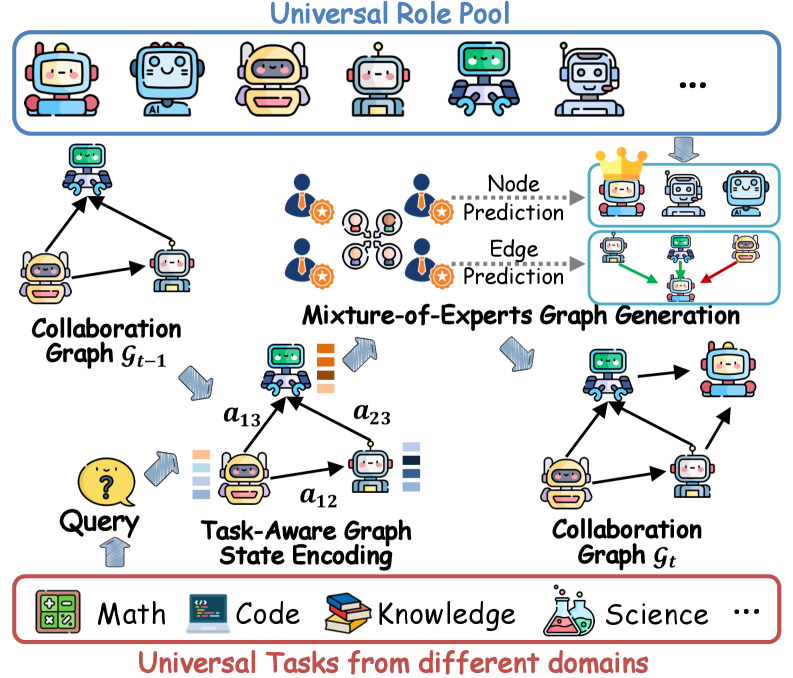
Fig 1: (a) Architecture of the generative model of OFA-MAS .
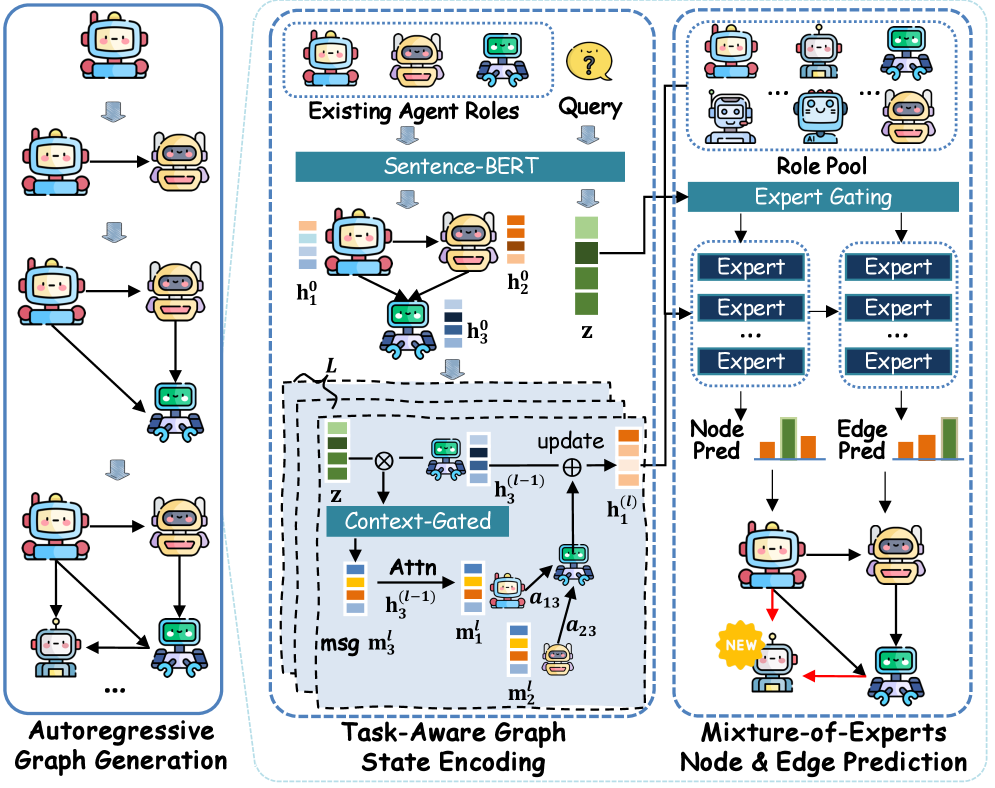
Fig 2: Figure 2 . The workflow of OFA-MAS .
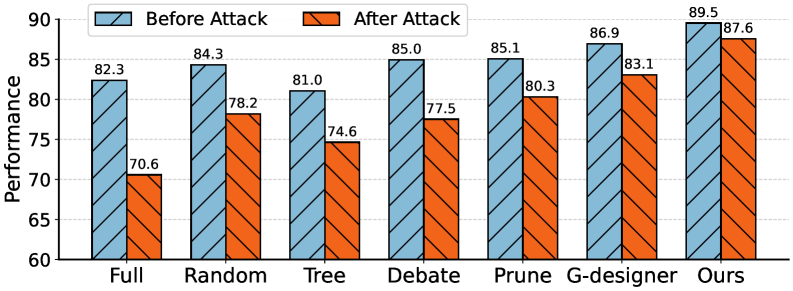
Fig 3: (a) Robustness Analysis
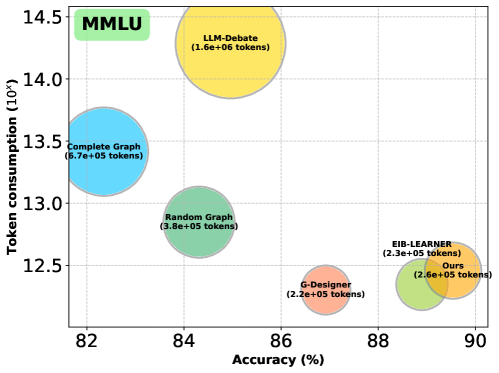
Fig 4: (a)
Ready to evaluate your AI agents?
Learn how ReputAgent helps teams build trustworthy AI through systematic evaluation.
Learn MoreConsiderations
Results are reported on standard academic benchmarks and an out-of-distribution dataset, but real-world production queries may expose different failure modes. Quality and coverage of the synthetic LLM-generated training data matter a lot—poor prompts or biased syntheses could limit performance. The model design (autoregressive generation and expert routing) adds implementation complexity and compute cost compared with simpler static topologies.
Deep Dive
The approach treats topology design as a conditional graph generation problem: given a user query, the model builds a collaboration graph step-by-step, picking the next agent role and its incoming connections. A task-aware graph state encoder filters node representations by relevance to the current query, so role selection and edge prediction are guided by task context. A mixture-of-experts generation module contains multiple specialized heads and an expert gate that routes different queries to different experts, letting the model learn and reuse diverse collaboration patterns across domains.
Training follows an easy-to-hard three-stage curriculum. First, unconditional pretraining teaches general graph generation principles. Second, the team uses large language models to synthesize many query→topology pairs and performs conditional training so the generator learns task-aware patterns without costly manual labels. Finally, supervised fine-tuning refines performance on higher-quality labeled examples. Experiments show a single unified model trained this way generalizes across six benchmarks and an out-of-distribution test, outperforming per-domain topology designers while reducing the need to maintain multiple specialist models. For practice: this design can simplify orchestration, surface reusable agent workflows (e.g., “analyst → inspector → solver”), and make deploying agent teams faster—though teams should validate synthesized training data and monitor production behavior closely. Tree of Thoughts Pattern
Not sure where to start?Get personalized recommendations
Credibility Assessment:
Mixed signals: one author with h-index ~11 and another with h-index ~6 suggest some established researchers, but no top venues or affiliations and it's an arXiv preprint — modest credibility.