The Big Picture
Teams of small drones can reliably explore unknown indoor spaces using local LiDAR maps and limited-range communication; training them centrally and running them independently works best in practice.
ON THIS PAGE
The Evidence
Training multi-drone teams in a realistic simulator that models limited communication, continuous controls, and per-drone local maps produces coordinated exploration policies that scale beyond single drones. Centralized training with decentralized execution gave the best balance of coordination and deployability, and a LiDAR-specific perception network improved performance by about 20%. Two-drone teams sometimes outperformed three-drone teams because adding agents raises coordination complexity; curriculum learning made training faster and more stable.
Not sure where to start?Get personalized recommendations
Data Highlights
1Up to 98% map coverage achieved in simpler environments with multi-agent setups.
2A LiDAR-specialized convolutional network delivered a ~20% performance gain over baseline perception.
3Training trials ran at scale: 1,000 episodes × 1,000 steps per trial, using HPC and distributed training tools.
What This Means
Robotics engineers building indoor drone teams will find the realistic comms model and LiDAR-based mapping approach directly useful for GNSS-denied deployments. Simulation and ML teams can reuse the Godot-based environment and curriculum-training recipe to speed up policy development and make transfer to real robots more practical. For researchers and practitioners, a Multi-Agent System framing can help generalize these results across setups.
Key Figures
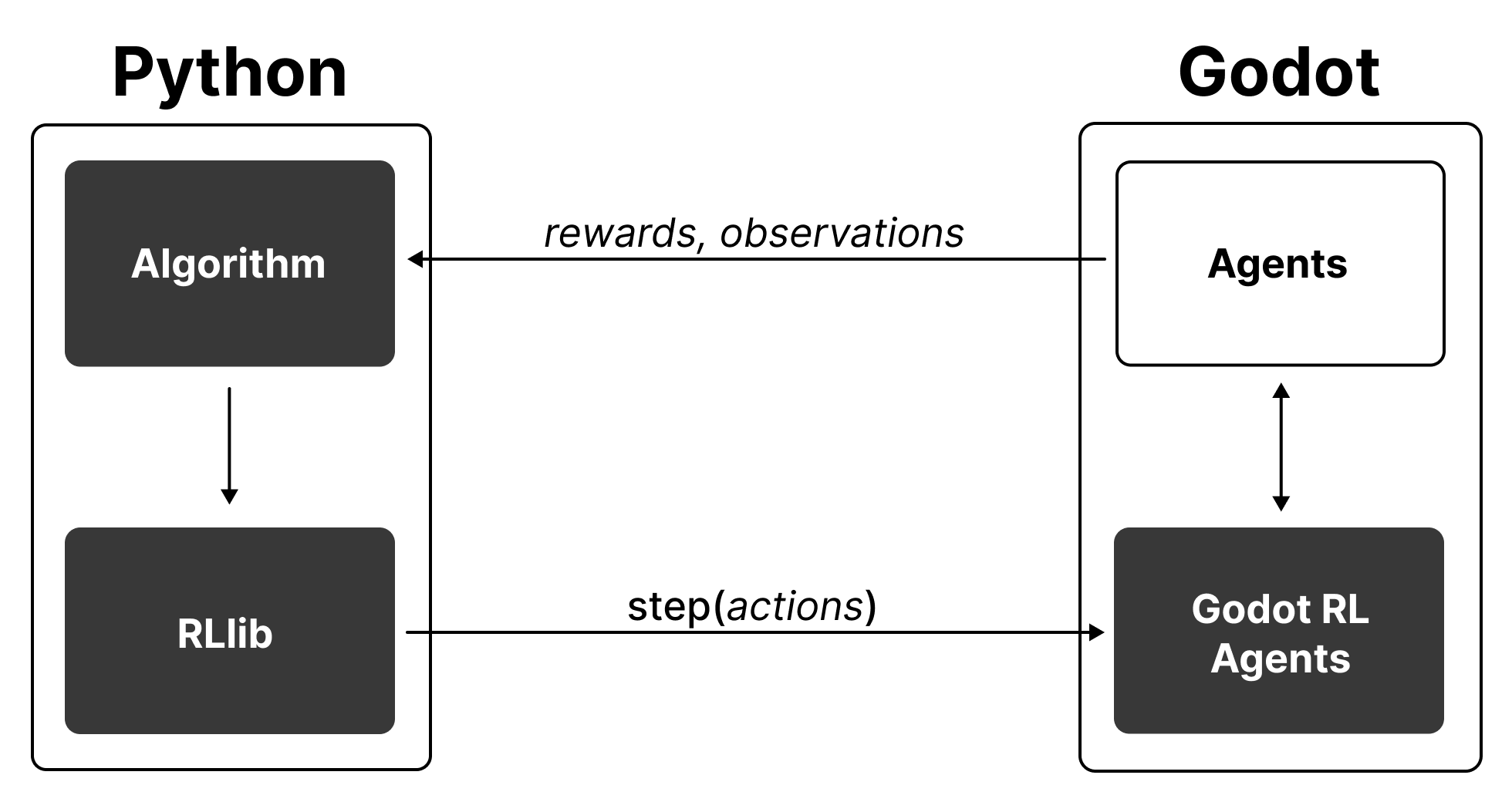
Fig 1: Figure 1 : Godot-Python RL Process.
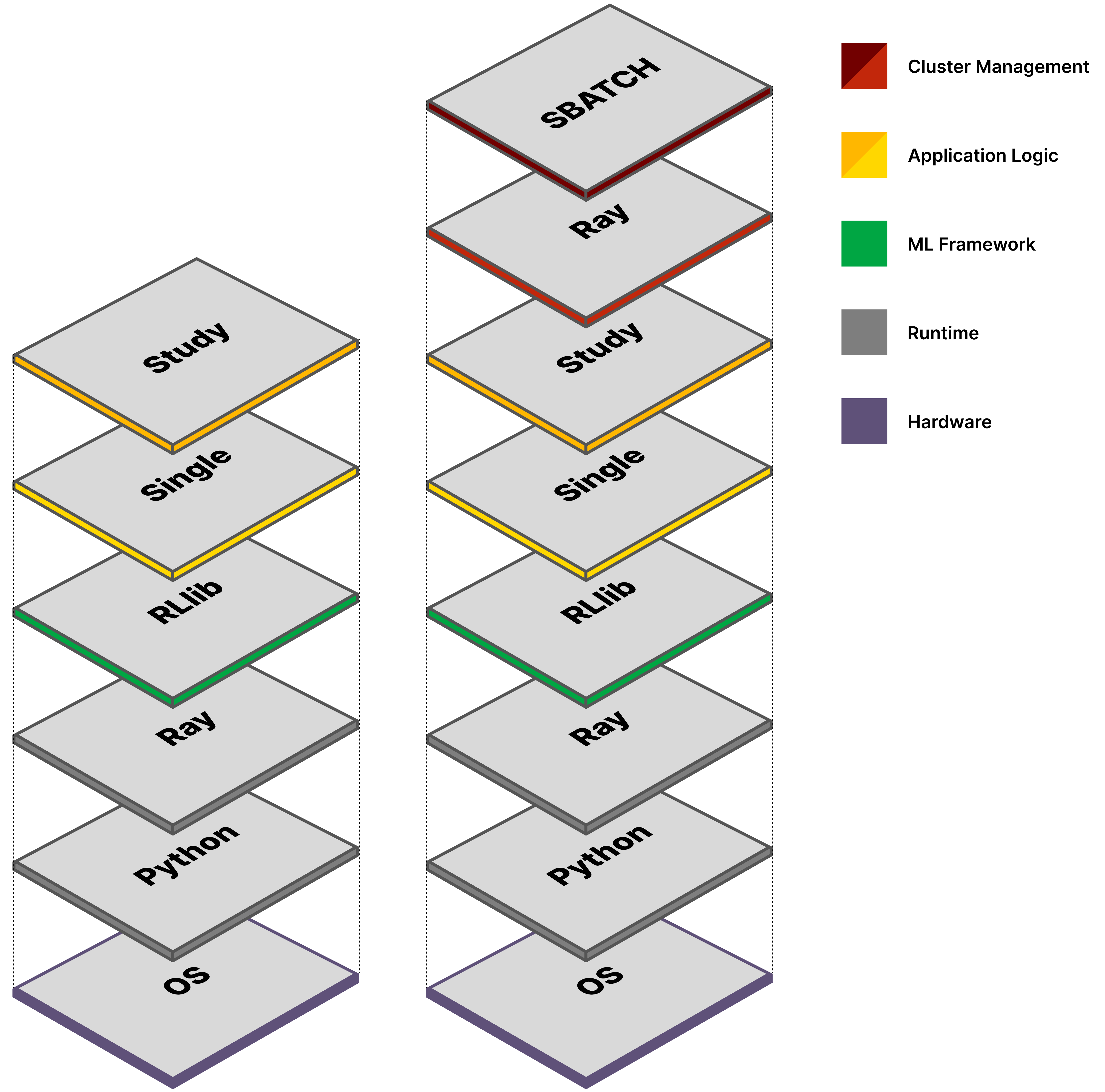
Fig 2: Figure 2 : Architecture Stack.

Fig 3: (a) Real world DGI Tello UAV.
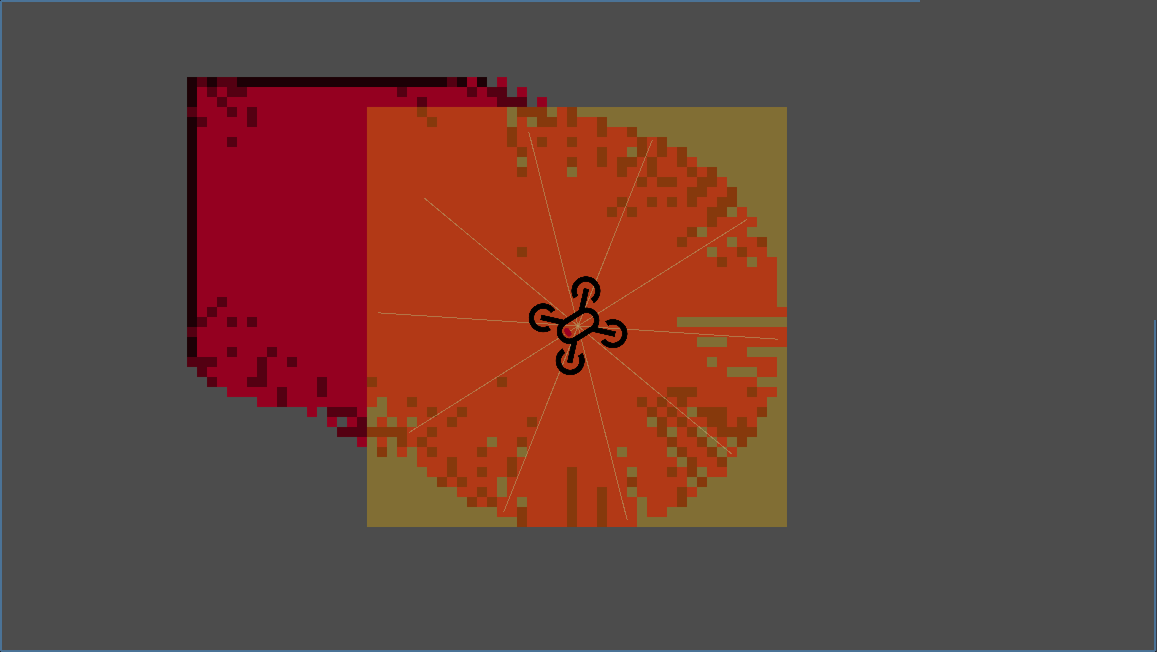
Fig 4: Figure 4 : UAV sensing and mapping: (1) Simulated LiDAR rays (grey lines), (2) The Local Map of the agent (red area), and (3) The Egocentric Map provided to the policy network (yellow area).
Ready to evaluate your AI agents?
Learn how ReputAgent helps teams build trustworthy AI through systematic evaluation.
Learn MoreKeep in Mind
Training multi-agent policies required large compute and many samples, so expect long training times and the need for HPC or cloud resources. Experiments were in 2D indoor settings with a simulated 360° LiDAR, so results may change in true 3D flights or with narrower sensors. The study compares learning paradigms rather than benchmarking classic coverage algorithms, so hybrid or classical approaches may still be competitive in some scenarios. Resource Exhaustion
Methodology & More
A practical framework was built to train small drone teams to explore unknown indoor environments under realistic communication limits. Each drone keeps a local occupancy grid updated from a simulated LiDAR, shares observations with neighbors within range (including simulated bandwidth and delay), and acts in continuous motion space. The system uses a game-engine simulator (Godot) for physically-grounded dynamics, Ray/RLlib for distributed reinforcement learning, and an experimental stack that supports centralized training with decentralized execution, fully decentralized training, and a single-agent (concatenated) baseline. centralized training with decentralized execution. Key results show centralized training with decentralized execution gives the best tradeoff between coordinated behavior and real-world deployability, while perception tailored to LiDAR data (a custom convolutional network) boosted performance by ~20%. Two-drone teams sometimes beat three-drone teams because coordination complexity rises nonlinearly with team size. Curriculum learning (progressively harder maps) sped up and stabilized training. The work highlights practical steps—realistic comms, egocentric local maps, continuous actions, and domain-specific perception—that make learned multi-drone exploration more deployable, while noting gaps for future work such as moving to 3D, adding visual sensors, and tighter comparisons with classical mapping algorithms. continuous actions
Avoid common pitfallsLearn what failures to watch for
Credibility Assessment:
Authors have very low h-indices and no listed reputable affiliations or venue (arXiv).