Key Takeaway
Treating multiple AI agents like players in a game — focusing on players, strategies, payoffs, and information — gives a practical framework that improves coordination, exposes where incentives fail, and points to concrete fixes for trust and evaluation.
ON THIS PAGE
What They Found
Organizing language-model agents around four game elements (players, strategies, payoffs, information) clarifies when agents will cooperate, compete, or mix motives, and explains why some group behaviors emerge. Language-mediated coordination (role-based teams and chained workers) reliably improves performance on long, complex tasks. Competitive setups can also help: a multi-agent debate system reached a state-of-the-art 41.4% Pass@1 on a coding-style benchmark, showing adversarial dynamics can boost outcomes. Major gaps remain in selecting stable group behaviors and designing incentives when agents have partial or private information. Consensus-Based Decision Pattern
Explore evaluation patternsSee how to apply these findings
Data Highlights
1A unified framework built on four core elements: players, strategies, payoffs, and information.
2LLM interactions cluster into three structures: cooperative, competitive, and mixed-motive systems.
3A competitive multi-agent debate design (SWE-Debate) achieved 41.4% Pass@1 on DeepSeek-V3, outperforming non-competitive baselines.
Why It Matters
Engineers building multi-agent workflows and orchestration should use the four-element view to reason about why agents succeed or fail and to design reward and communication rules. Technical leaders evaluating agent reliability and trust can use the taxonomy to pick benchmarks and decide whether to favor cooperative, competitive, or hybrid setups. Researchers can target the identified gaps—equilibrium selection and incentive-compatible communication—to improve real-world robustness. Chain of Thought Pattern
Key Figures
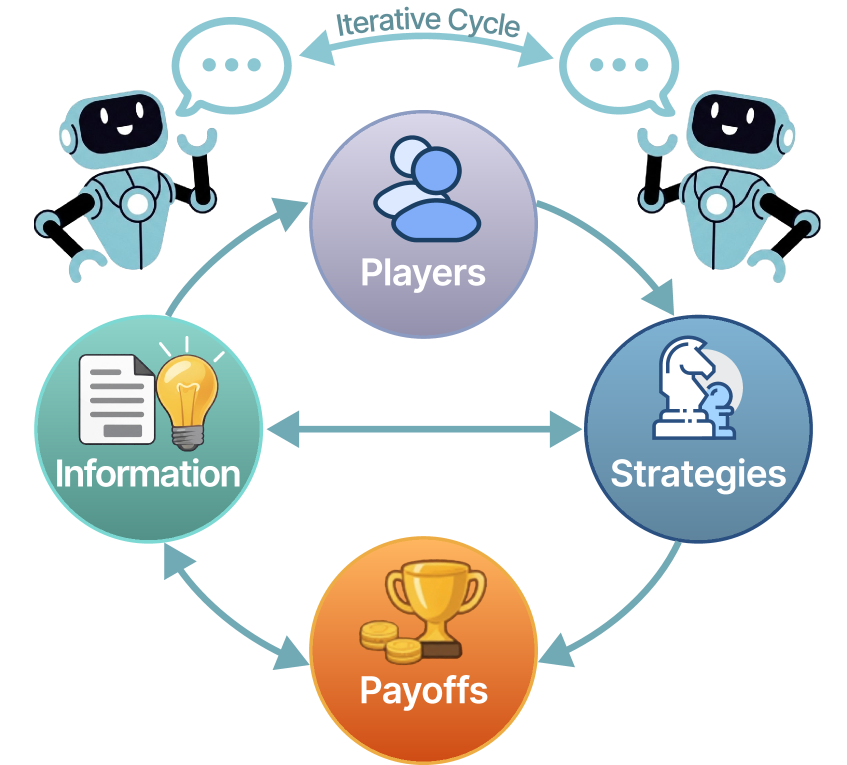
Fig 1: Figure 1: A game-theoretic framework for LLM-based multi-agent systems illustrates the dynamic interplay between the four core elements of a game: Players, Strategies, Payoffs, and Information.
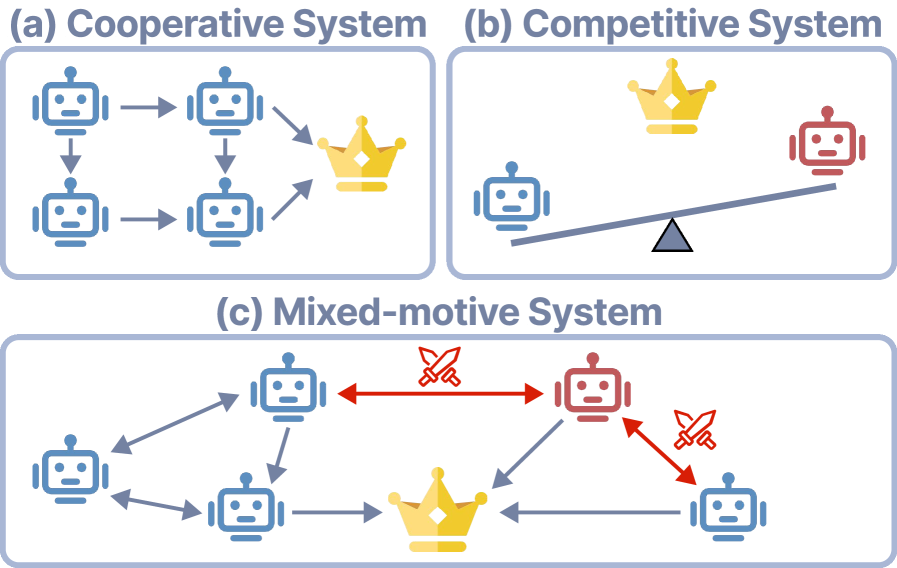
Fig 2: Figure 2: Illustration of three interaction structures among LLM-based players.
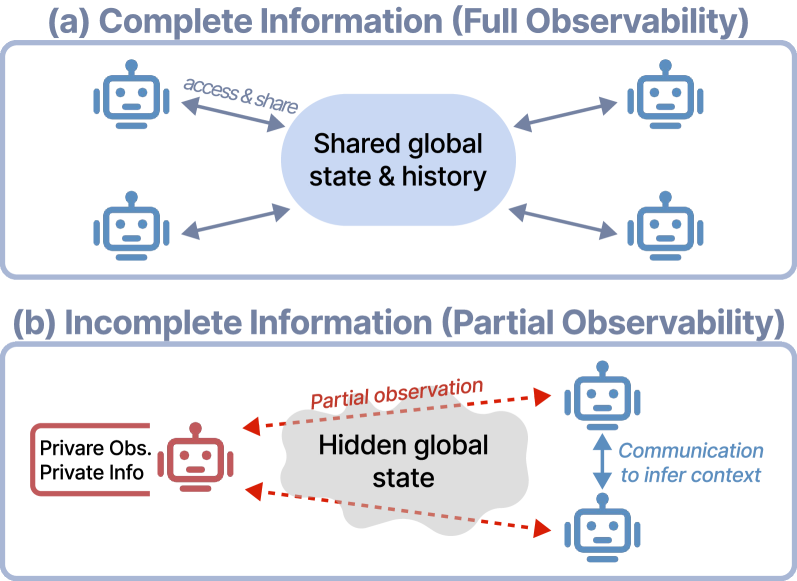
Fig 3: Figure 3: Illustration of information structures among LLM-based players.
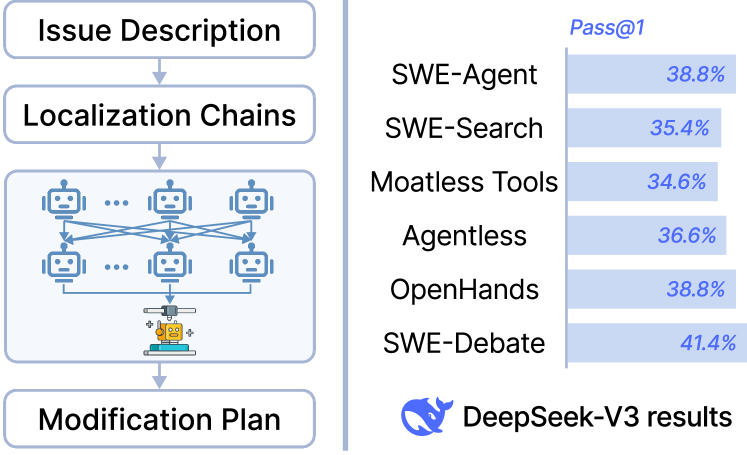
Fig 4: Figure 4: Framework and performance of SWE-Debate. (Left) The workflow incorporates a multi-agent debate mechanism to iteratively refine modification plans. (Right) This competitive architecture achieves a SOTA 41.4% Pass@1 (DeepSeek-V3), significantly outperforming non-competitive baselines and validating the efficacy of adversarial interactions.
Ready to evaluate your AI agents?
Learn how ReputAgent helps teams build trustworthy AI through systematic evaluation.
Learn MoreConsiderations
The framework is a survey-driven synthesis rather than a single large experiment, so effectiveness depends on how you map your problem to the four elements. Results reported across examples come from specific benchmarks and architectures; gains may vary with model size, prompt design, and environment complexity. Assumes agents behave as utility-maximizers, which may not hold for noisy or constrained language models and could lead to mismatches between theory and practice. Semantic Capability Matching Pattern
Deep Dive
A compact game-style framework organizes multi-agent systems built from language models around four pieces: who the players are, the strategies they can use, the payoffs they’re optimizing, and what information each player holds. Framing multi-agent interactions this way makes it easier to categorize systems as cooperative (shared objectives), competitive (conflicting goals), or mixed-motive (partial alignment). Practical examples include chained worker-manager setups that decompose long problems into smaller steps and role-based dialogue teams that simulate human-like collaboration. Surveyed examples show clear trade-offs: cooperation and role specialization boost joint task performance and long-context reasoning, while structured competition (multi-agent debate) can improve solution quality on hard benchmarks (notably a 41.4% Pass@1 result). The survey highlights unresolved challenges: how groups of agents converge to stable, reliable behaviors, how to design incentives and communication that are robust under partial or private information, and how to create standardized agent-to-agent evaluation and trust signals. For practitioners, the framework is a practical checklist for designing, testing, and auditing multi-agent deployments and for prioritizing investments in incentive design and information sharing. Supervisor Pattern Tree of Thoughts Pattern
Avoid common pitfallsLearn what failures to watch for
Credibility Assessment:
Authors have low h-indices and no institutional information; arXiv preprint with no citations.